
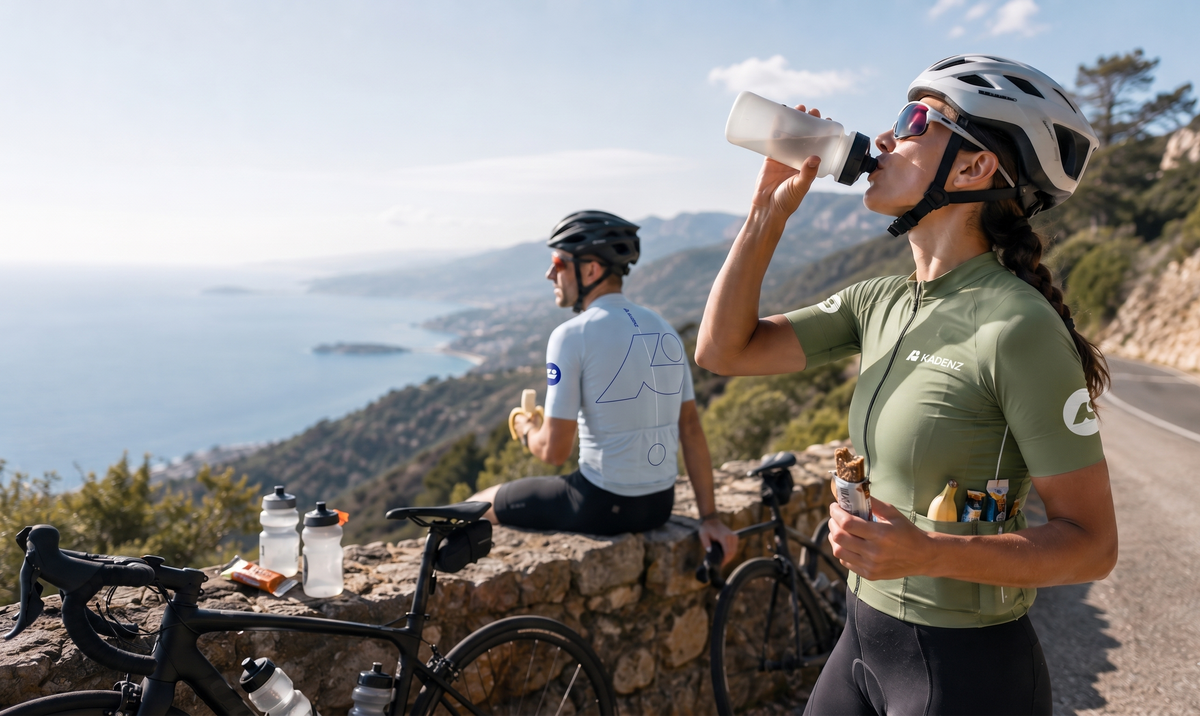
Starting with good energy reserves is essential. But on rides of 2 hours or more, what you eat and drink during the effort is just as crucial. The bonk, or hitting the wall in cycling jargon, is the number one enemy of long rides. It occurs when glycogen reserves are depleted, and the body can no longer provide the necessary energy to the muscles. This guide explains how to plan your nutrition during a bike ride to maintain your energy level from the first to the last kilometer.
Why should you eat during a long bike ride?
The human body stores between 400 and 600 grams of glycogen, which is about 90 minutes of energy at moderate intensity. Beyond that, without external intake, reserves gradually deplete. The body then switches to lipids as an energy source, a slower process that significantly reduces available power. The bonk sets in: heavy legs, difficulty concentrating, inability to maintain pace.
On a ride of less than 90 minutes at low intensity, eating during the effort is not essential if you started with good reserves. However, as soon as the duration exceeds 90 minutes, and even more so for rides of 3 hours, sportives, or long-distance gravel rides, refueling during the effort becomes indispensable.
When should you start eating during a bike ride?
The most common mistake is waiting until you are hungry to eat. The feeling of hunger often arrives late, when reserves are already too low to be replenished quickly. You need to anticipate.
The general rule: start eating between 45 and 60 minutes after the start, even if you don't feel hungry. Then, maintain a regular intake every 30 to 45 minutes. This preventive refueling strategy maintains stable blood sugar and avoids sudden drops in energy.
On a ride with elevation, adjust the timing to your route: eat on long climbs (where you can easily access your pockets) rather than on descents where concentration on the road is paramount.
How much to eat during a cycling effort?
Nutritional recommendations for endurance cycling are established in grams of carbohydrates per hour of effort:
1 to 2-hour rides
30 to 40g of carbohydrates per hour is sufficient. This is equivalent to one banana or one energy bar. Hydration remains the priority.
2 to 3-hour rides
50 to 60g of carbohydrates per hour. The body begins to seriously tap into its reserves. A gel every 45 minutes combined with a banana or dates helps maintain the level.
Rides over 3 hours
60 to 90g of carbohydrates per hour. For long-distance gravel rides, sportives, or tours, intake can go up to 90g/h, provided: combining two different carbohydrate sources (glucose + fructose) to optimize intestinal absorption and avoid digestive issues. Beyond 60g of glucose alone per hour, the absorption system is saturated.
What to eat during a bike ride? The best foods
Banana: the ultimate refueling food
The banana is the most widely used cycling food, and for good reasons. It provides about 25g of carbohydrates in the form of fructose and glucose, potassium (prevents cramps), magnesium, and a texture that is easy to consume while riding. A ripe banana is more easily digestible than a green banana. Cut it in half and put it in your back pocket before starting.
Dates and dried fruits
Dates are a concentrated source of natural carbohydrates (about 70g per 100g), ideal for cyclists who prefer to avoid industrial products. Easy to transport, they are easily consumed while riding. Dried apricots, raisins, and figs offer similar profiles.
Energy bars
Energy bars are designed for effort: easily digestible, balanced in carbohydrates, practical to carry. Choose bars based on cereals and fruits, with a minimum of saturated fats and additives. Avoid protein bars (too slow to digest during effort) and classic chocolate bars (too high in fat).
Energy gels
Energy gels are the most concentrated and fastest-absorbing form of refueling. A standard gel provides 20 to 25g of carbohydrates in a few minutes. They are particularly useful at the end of a ride or before a demanding climb. Disadvantage: their sugary texture and concentration can cause digestive discomfort if consumed without water or in too large quantities. Always take a gel with a sip of water.
Fruit jellies and energy candies
Energy fruit jellies (sports fruit jelly type) combine pleasant taste with effective carbohydrate intake. They are gentler on the digestive system than gels and are well suited for cyclists who tolerate concentrated industrial products poorly. Candies based on maltodextrin and fructose are also effective on long rides.
Gingerbread and dry biscuits
Traditional solid food remains relevant for long rides. Gingerbread (low in fat, rich in carbohydrates), rice cakes, dry biscuits like toast or rice crackers are simple and easily digestible options. They provide variety and can be more pleasant to consume than industrial products on rides of 4 hours or more.
Hydration during a bike ride: the 500ml per hour rule
Hydration is the most critical aspect of cycling refueling. A fluid loss of 2% of body weight is enough to degrade performance. In hot weather, a cyclist can lose up to 1.5 to 2 liters of water per hour of intense effort.
The general rule: drink 500 to 750ml of water per hour of effort, or a sip every 10 to 15 minutes. Do not drink it all at once; absorption is better in small, frequent amounts. And don't wait until you are thirsty; thirst is a late signal.
Water or energy drink?
For rides of less than 90 minutes, water is sufficient. Beyond that, isotonic energy drinks provide carbohydrates and electrolytes simultaneously, which improves water absorption and maintains blood sugar. They generally contain 30 to 50g of carbohydrates per liter, sodium, potassium, and magnesium.
You can prepare a homemade drink by mixing 500ml of water, 30g of maltodextrin, a pinch of salt, and a squeeze of lemon juice. Simple, effective, and without additives.
The importance of sodium
Sweating leads to a significant loss of sodium, the main electrolyte regulating fluid balance. A sodium deficiency causes cramps, headaches, and accelerated dehydration despite good water consumption. On long rides in hot weather, add a pinch of salt to your bottle or opt for electrolyte tablets.
How to organize your refueling during a race or sportive?
In a race or an organized sportive, official aid stations are generally placed every 40 to 60 km. Do not rely solely on them; waiting lines, the food offered, and your personal timing may not match your nutritional strategy.
Always start with enough of your own provisions for 2 to 3 hours of effort. Use official aid stations to replenish your water reserves and get solid food as a bonus. Prepare your refueling strategy in advance based on the course profile; significant climbs require special attention.
The most common nutrition mistakes during cycling
Waiting until you are hungry
The sensation of hunger arrives too late when reserves are already low. Follow a preventive refueling schedule from the first hour, regardless of your hunger sensation.
Eating too much at once
A massive intake of carbohydrates in a single sitting saturates the digestive system and can cause bloating or abdominal cramps. Divide your intake into small, regular amounts – a gel or a banana every 30 to 45 minutes rather than a large amount at once.
Neglecting hydration
Drinking only when thirsty is insufficient. On a 3-hour ride, it is common to return with a 1 to 2-liter fluid deficit. This deficit impacts recovery, causes headaches, and can lead to night cramps.
Trying new foods during a race
Never test a new nutritional product for the first time in a competition or on an important long ride. Every digestive system reacts differently to energy products. Test your gels, bars, and drinks during training to identify what works for you.
FAQ — Nutrition during a bike ride
Can you eat real food during a long bike ride?
Yes, and it's even recommended on very long rides (over 4 hours). Solid food – bananas, gingerbread, jam sandwiches, rice cakes – is better tolerated over time than concentrated gels. Grand professional tours have long been ridden with traditional solid foods. Gels are one tool among others, not an obligation.
Are energy gels essential?
No. Gels are practical and effective, but their use is not mandatory. Natural alternatives like dates, bananas, or homemade bars can fulfill the same nutritional role with better digestive tolerance for some cyclists.
How to avoid bonking during a bike ride?
Start your refueling 45 minutes after departure without waiting for hunger. Maintain an intake of 50 to 60g of carbohydrates per hour on rides of 2 hours or more. Hydrate regularly. And make sure you have eaten well before starting – refueling during the effort supplements initial reserves, it does not replace them.
Should you adapt your nutrition during effort in hot weather?
Yes. In hot weather, hydration needs increase significantly. Increase your fluid intake (up to 750ml to 1 liter per hour) and add electrolytes to your drink. Slightly reduce solid food intake, as heat slows digestion and increases the risk of gastrointestinal discomfort. Prioritize gels and isotonic drinks.
Conclusion
Nutrition during a bike ride is a discipline in itself. The rules are simple: start early, divide intake, hydrate regularly, and avoid common mistakes. Test your nutritional strategy during training, adjust according to your metabolism and preferences, and trust your body. Well-managed nutrition during effort is the guarantee of finishing your ride with energy and fully enjoying it until the end.
→ Kadenz designs cycling equipment with deep and stable back pockets — because refueling is part of the ride. → [Discover the collection]