
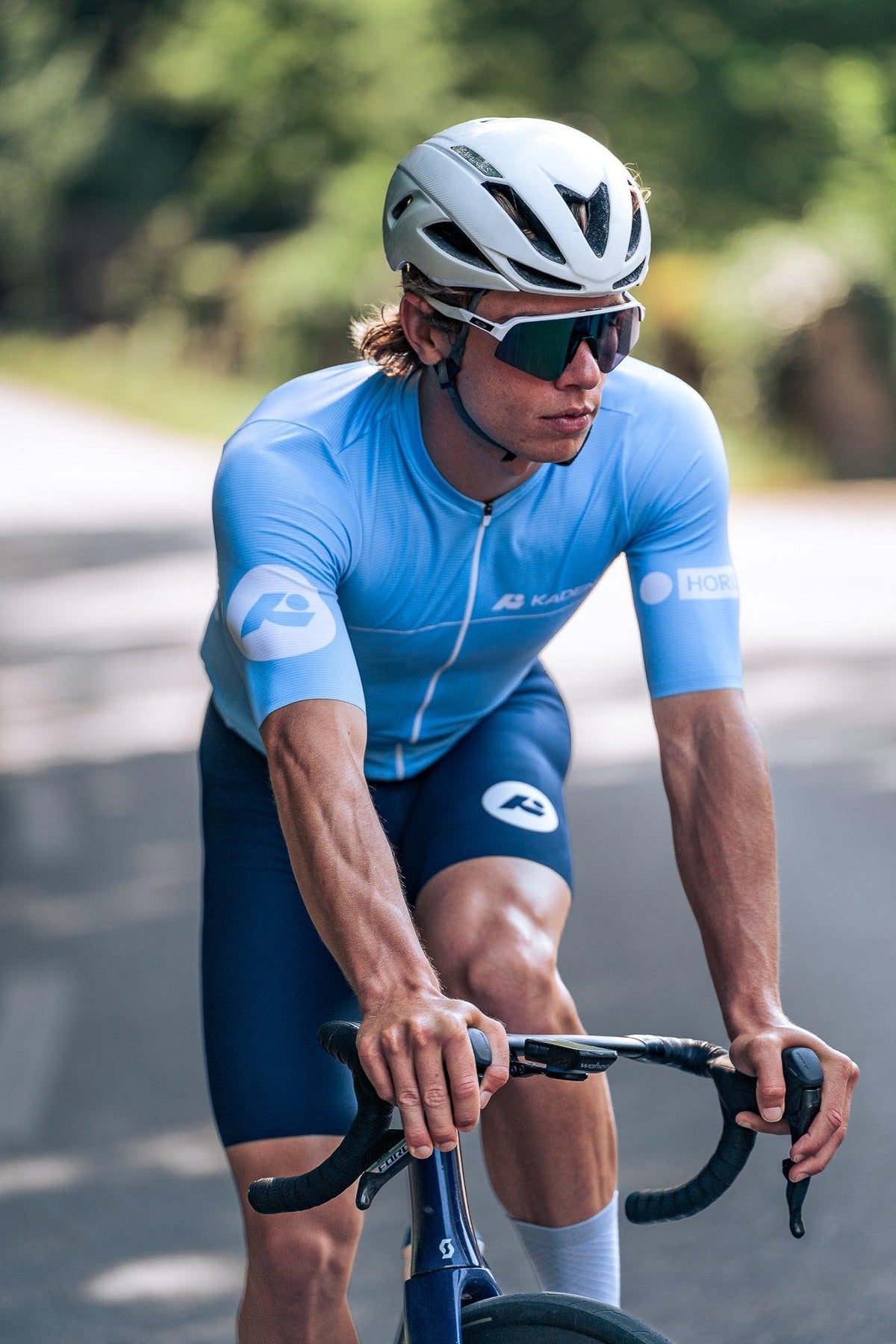
Strength is the great forgotten element of cycling training. We readily work on cardio, speed, and endurance, but less often on this ability to generate power at a low cadence, which is nevertheless crucial as soon as the pace picks up on a climb. A cyclist who has worked on their strength holds on better when their training partners push the pace. Here is how to develop it, on and off the bike, without getting injured.
Why strength matters on the bike
With identical fitness and cadence, the ability to push a harder gear allows you to climb faster or better resist the pull of gravity on steep sections. It is an obvious point that deserves clarification: having more strength means becoming stronger. This work is clearly distinct from speed work, which aims for faster pedaling at a high cadence and complements a cyclist's overall power in the same way as cardiovascular training. Many regular cyclists simply lack it because they have never truly worked on it.
Furthermore, having strength on the bike has nothing to do with muscle size. A lanky climber can develop more strength than a more imposing build who has never specifically worked on it. It is a skill in its own right, with its own progression curve, and there is good news for those who get serious about it: the first results are felt fairly quickly, generally within a few weeks of regular sessions.
The method on the bike: big gears
The basic principle is to ride more slowly than usual, with a gear ratio significantly higher than normal. On a false flat or moderate slope, stay in the big chainring and use a smaller cog than usual, then pedal in four- to five-minute sets while limiting your cadence; the goal is to work the muscles, not the heart. Your heart rate should remain measured, around 75% of your maximum: exceeding this threshold turns the session into disguised cardiovascular work, with fatigue that is disproportionate to the desired benefit.
Progression is built over several weeks: more repetitions, gradually steeper slopes, until you cover the full range of situations encountered out on the road. Finishing each strength session with a few minutes at a high cadence, using an easier gear than usual, helps restore speed and prevents your legs from feeling heavy at the end of the session. This work is also noticeable at the end of a ride: a cyclist who has developed their strength maintains a better pedal stroke in the final kilometers, when fatigue naturally impairs coordination.
Strength training off the bike: weight training and core work
Days without a ride are well suited to complementary work in the gym, provided you target the muscle groups that are actually useful for pedaling rather than following a generic program. Working with an instructor, at least for the first few sessions, allows you to focus the work on your cycling and avoid improper movements. Core work deserves a place of its own: ten to twenty minutes of held postures, in sets of thirty seconds to one minute with recovery between each repetition, strengthens the abdominal belt without requiring any special equipment; a solid core stabilizes the pelvis and improves power transfer to the pedals, especially when out of the saddle.
This off-bike work never replaces sessions on the road or a smart trainer: it prepares you for them and makes them more effective. A body with better core stability handles big-gear sessions better, with fewer parasitic compensations in the back or shoulders. Two short sessions per week are more than enough to reap a real benefit without encroaching on your main training volume on the bike.
Planning strength throughout the season
Ideally, this work begins after the return-to-training period, at a rate of one to two sessions per week depending on your overall training volume. Once FTP and threshold work are introduced into the program, it becomes difficult to maintain this pace, but keeping at least one strength session every ten days during the season prevents you from losing your gains. Between races, temporarily returning to easier gears allows your legs to recover without completely abandoning this quality, which is better maintained all year round than rediscovered every winter.
This consistency pays off more than occasional intensity: a few minutes of big gears per week, maintained over several months, produces a more lasting benefit than a block of intensive sessions followed by several months without any strength work. As with most physical qualities, consistency beats isolated effort.
→ Kadenz equips strength sessions just like Sunday rides. → [Discover the collection]