
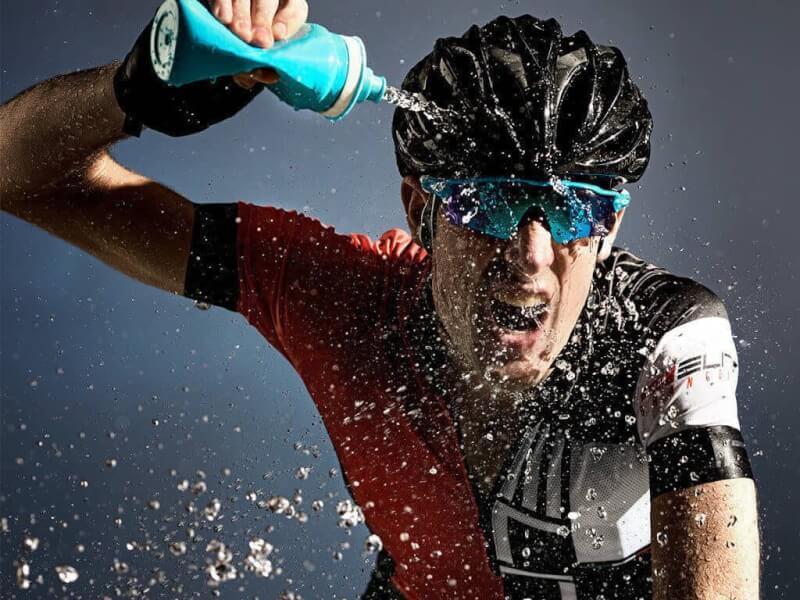
The first heatwaves change everything on a bike. A ride that seemed easy last week becomes much more demanding at 32 degrees. The body works double time: it pushes on the pedals while fighting against overheating. Understanding what is at play, preparing for it, and knowing how to recover afterward makes the difference between a controlled ride and a preventable heatstroke.
What happens in the body when it is hot
Exertional heatstroke
Beyond a certain internal temperature, the body loses its ability to cool down. Sweat is no longer enough to dissipate the heat produced by physical exertion. Warning signs often precede malaise: headaches, chills despite the heat, mild confusion, and the cessation of sweating while exertion continues. At this stage, you must stop, move to the shade, and cool down immediately—it is non-negotiable.
Dehydration
In high heat, water loss can exceed one liter per hour depending on intensity and body mass. A loss of just 2% of body weight in water already reduces performance capacity and increases heart rate for the same level of exertion. Thirst always arrives too late: it signals that a deficit is already established.
Hyponatremia: the opposite trap
By drinking large amounts of pure water during a long ride without salt intake, blood sodium can become dangerously diluted. The symptoms mimic those of dehydration: nausea, confusion, swollen hands—which sometimes leads to drinking even more water, worsening the problem. On long, hot rides, water alone is not enough.
Heat-related cramps
Profuse sweating does not just remove water: it also carries away sodium, potassium, and magnesium. A mineral deficit, combined with muscle fatigue, promotes the onset of cramps, sometimes as early as the middle of a hot ride. A drink containing electrolytes, rather than pure water, limits this risk for efforts lasting longer than an hour.
Predispositions to take before setting off
Choosing the right time
Between 12:00 PM and 5:00 PM, heat is at its peak and direct solar radiation adds an extra thermal load. Favor early mornings or the end of the day. A ride at 7:00 AM at 22 degrees is completely different from the same ride at 2:00 PM at 34 degrees, even at the same intensity.
Acclimate gradually
The body adapts to heat in about ten to fourteen days: blood volume increases, sweating becomes more efficient, and the thermal tolerance threshold rises. The first hot rides of the season should remain short and moderate. Incidents often occur during the first heat peak, before any acclimatization has taken place.
Prepare your hydration in advance
Start your ride already well-hydrated, not just at the moment you leave. Add a pinch of salt or electrolyte tablets to your bottle as soon as the ride exceeds an hour and a half in high heat. Plan for plenty of water, or identify refueling points on the route in advance.
Protect yourself from UV rays
Heat is not the only risk: UV radiation remains high even under overcast skies, and the prolonged exposure of a long ride makes it worse. Apply SPF 50 sunscreen to exposed areas—neck, ears, forearms, hands—and reapply after two to three hours of effort, as sweating will have largely washed it away. Sunglasses with UV filters protect your eyes, which are heavily strained by glare off the asphalt, and a well-ventilated helmet limits heat buildup on the skull without sacrificing protection.
During the effort: good habits
Drink before you are thirsty
Drink in small, regular sips from the start of the ride, without waiting for the signal of thirst. One sip every ten to fifteen minutes is enough to maintain balance, far better than gulping down a large quantity all at once every hour.
Listen to warning signals
Dizziness, goosebumps despite the heat, a sudden drop in alertness, sweating that stops abruptly: these are signals that require you to slow down, stop in the shade, and cool off before continuing—or even cutting the ride short. Ignoring these signs just to finish a route makes no sense.
Adapt the intensity, not just the distance
In high heat, the same power or speed requires a higher cardiac effort. Aim for an intensity 10 to 15% lower than what you would do in temperate weather. Today's time matters less than your cardiovascular health.
After the ride: recover well
Rehydrate over time, not all at once
The water deficit accumulated during a hot ride cannot be filled with a single large glass of water upon arrival. It is better to drink regularly in the hours that follow, reintroducing salt via food or a recovery drink so that the water is actually retained by the body rather than immediately flushed out. Urine color remains a simple benchmark: the clearer it is, the better your hydration has been restored.
Weigh yourself before and after to adjust
For recurring long, hot rides, weighing yourself before setting off and upon returning provides a concrete measurement of actual water loss. Each kilo lost corresponds approximately to a liter of deficit to be made up. Using this metric over a few rides helps you better calibrate the amount of water to bring next time, rather than guessing blindly.
When to seek advice
Headaches, intense fatigue, or nausea that persist for several hours after arrival, despite rest and rehydration, should not be ignored. These symptoms can signal underlying heatstroke that did not fully resolve at the time. In such cases, it is better to seek medical advice rather than waiting for it to pass on its own.
Equipment: an ally against the heat
A jersey with lightweight fabric and extended mesh under the arms and on the back accelerates body heat dissipation and allows sweat to fully perform its cooling role. Light colors also limit solar radiation absorption. Two bottles instead of one, or a hydration pack as a supplement on multi-hour rides, also prevent the need to ration your consumption due to a lack of supply. These are details which, combined with a good hydration strategy and a well-chosen schedule, turn a ride in high heat into a controlled effort.
→ Kadenz designs cycling equipment with the needs of the athlete in mind, even when the thermometer climbs. → [Discover the collection]