
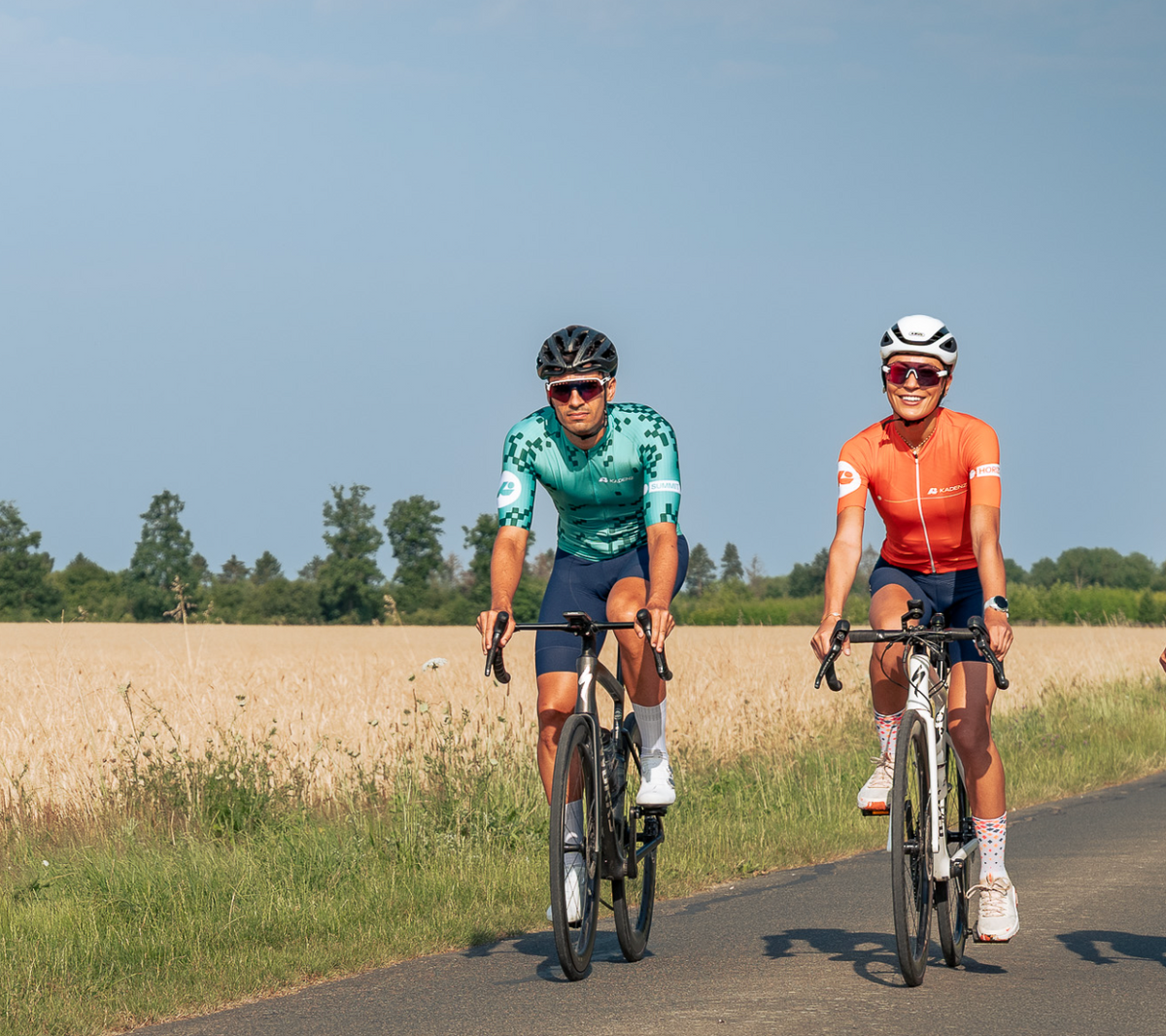
Riding as a pair changes the nature of a ride. But when one pushes an average of 30 km/h and the other 20, the plan to share the bike ride can quickly fall apart. The good news: a difference in skill level doesn't mean you can't ride as a couple. It just requires a little organization and accepting that each person doesn't always have the same goal for a given ride.
Why a skill gap puts riding together to the test
On flat ground, an average speed difference of 10 km/h forces the faster rider to constantly slow down or the slower rider to overexert themselves to keep up. Neither option is sustainable in the long run: the first frustrates the former, and the second exhausts the latter. On climbs, the problem is reversed. The power required to move forward depends on weight and physical condition, which further accentuates the gap already present on flat terrain. Without adjustments, the pair ride becomes a ride where one waits for the other—which, in the medium term, discourages the weaker partner and frustrates the stronger one.
Finding balance on the flats
Taking advantage of drafting
The stronger rider can take the lead and provide a windbreak. The person behind benefits from the draft to maintain a higher speed without requiring more effort from their body. This is the simplest solution for riding at a shared pace without the skill gap resulting in a disproportionate difference in heart rate.
Accepting a ride without physiological stakes
Some rides don't need to have an impact on everyone's fitness. Riding together, chatting, discovering a route: the only goal is the time spent as a pair. The stronger rider can then accept a low heart rate without seeing it as a wasted ride—it serves a purpose other than progression.
Managing the gap on climbs
Each at their own pace, a meeting point
On climbs, forcing a common pace is rarely sustainable. A simple alternative: each person climbs at their own pace, with a meeting point at the top. The faster rider can also head back down to meet the other once they reach the summit, which adds elevation and enjoyment to their own ride without penalizing their partner's.
Playing with cadence rather than speed
To stay close to each other despite the gap, the stronger rider can climb at a higher pedal cadence than natural, which slows their progress without changing their heart rate. This requires staying above about 40 revolutions per minute to avoid excessive strain on the tendons. An electric-assist bike is also an option to consider for the less experienced person, for rides where the elevation gap is too pronounced to be bridged otherwise.
Not sharing everything
A clear difference in level cannot be made up on every ride. Some sessions—recovery after an intense effort, getting back into the swing of things before a cycling event—do not need to be shared. It is perfectly possible to ride alone for part of the ride, then join your partner for the final kilometers. This organization requires a bit of anticipation, but it protects the quality of everyone's training without sacrificing the time spent together.
Consistency does the rest
The more frequent the rides as a pair, the more the skill gap naturally narrows with the progress of the less experienced rider. What seems like an insurmountable divide today becomes, over the months, a manageable difference with the right adjustments. Patience and organization count just as much as watts.
→ Kadenz outfits every style of riding, from sprints to leisurely climbs. → [Discover the collection]